
7 min read
Big Store vs Local Custom Cabinets: Price, Colour and Fit
Compare big store cabinet prices with local custom cabinetry in Windsor and Essex County, including colour choices, box construction and customization.
Walking into a big box store and walking into a local cabinet shop feel like two different errands because they are. One hands you a price for a box that already exists in a warehouse. The other hands you a price for a box built to your kitchen's measurements, in a finish you chose, with hardware you can open and close before you pay. The numbers can look far apart on paper, but they rarely describe the same product. Knowing what sits behind each price makes the decision much easier, especially in Windsor and Essex County, where older homes bring their own quirks.
What a Big Store Price Is Really Measuring
A shelf price on a stock cabinet covers a standard box in a fixed set of widths, a limited number of door profiles, and a colour the store already stocks. That is not a flaw. It is a business model built on volume and predictability, and it works well for a straightforward galley layout, a laundry room or a rental unit where speed matters more than fit.
The trouble starts when that shelf price gets compared directly with a quote for custom premium cabinets. The stock number usually describes the cabinet alone. A custom quote typically describes a measured, assembled, finished product, sometimes with delivery and installation folded in. Comparing the two without lining up the scope is like comparing the price of lumber to the price of a finished room.
What Custom Cabinetry Costs Across Canada
Houzz professional listings for Toronto, Calgary and Ottawa each report an average custom kitchen cabinet cost ranging from $2,620 to $13,485. That spread is wide on purpose. The low end tends to reflect smaller kitchens and simpler door styles, while the high end reflects larger layouts, premium finishes and upgraded storage.
The practical lesson is that no single number answers the question for your home. Kitchen size, box material, drawer hardware, finish choice and the number of custom elements all move the total. A written quote based on your actual measurements is the only figure worth comparing, and any supplier who will not put the scope in writing is telling you something useful.
Box Construction and Hardware: Where the Money Goes
Cabinet boxes are where the difference between a ten-year kitchen and a thirty-year kitchen lives, and they are also the part shoppers see least. Some Canadian manufacturers publish their specifications openly, including cabinet boxes and shelves made from 3/4 inch thick material, solid plywood dovetail drawer boxes, full-extension slides with soft-close and adjustment, and European concealed hinges. Those details cost money, and they are often the first thing trimmed to hit a lower retail price.
At Windsor Materials and Retail Supply, custom kitchen cabinets use plywood box construction with soft-close hardware and a lifetime warranty. Plywood holds screws and stands up to moisture better than the particleboard found in many budget boxes, which matters in a kitchen that sees steam, spills and humid summer air.

Colour, Finish and the Limits of a Stock Palette
A big store sells the colours it stocks. That is the whole rule. If your heart is set on a shade that is not on the sample board, the answer is usually no, or an upcharge that arrives with a lead time nobody mentioned at the desk.
A locally operated cabinet supplier works from a broader palette because the finishing happens closer to home. Windsor Materials and Retail Supply offers 12 finishes across its custom cabinet line, and custom manufacturers elsewhere describe similar ranges, with one Italian-designed line advertising tailored storage and premium finishes. More options do not mean you need all of them. They mean you are not forced into beige because beige was on the shelf.
Lighting matters here too. A door sample under fluorescent store lights looks very different in a kitchen with west-facing windows. Ask to see the finish in daylight, and ask whether the sample is the actual production finish rather than a printed approximation.
Customization: Corners, Ceilings and Awkward Gaps
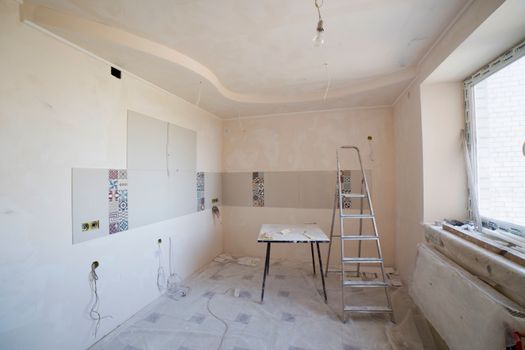
Older homes in this region are full of the details stock cabinets dislike: out-of-square walls, bulkheads, rad covers, a window that sits a few centimetres off from the one opposite, and ceilings that are not the same height at both ends of the room.
Custom cabinetry answers those problems by being made for them. Cabinets can be built to the ceiling, fillers can be sized on site, and storage can be tailored rather than approximated. One Canadian maker describes wall-to-wall custom cabinetry that includes hidden desks and bars, which is the kind of feature that never fits a standard cabinet grid. Stock cabinets can be adapted with filler strips and trim, and a skilled installer will do it well, but every workaround shows up somewhere.
The Local Advantage: Measuring, Coordination and Accountability
A local supplier can measure the room, not a drawing of the room. Liber Design Ltd. has served Calgary and area as a local custom cabinetry company since 2008, and its published specifications include solid plywood dovetail drawer boxes and 3/4 inch cabinet boxes and shelves. Deslaurier is noted among Canadian cabinet companies for high-quality custom cabinetry and detailed project coordination. Those are examples from outside Windsor, but they describe the model local shops follow: one point of contact from measurement through delivery.
Choice Cabinet Canada advertises free quotes, optional installation or a do-it-yourself route, and multi-residential pricing for builders. That last item matters in Essex County, where builders sourcing materials for several units need consistent colour and sizing across a whole project rather than a store's remaining stock.
Cabinet Spec Sheet: What to Ask Both Suppliers
| Feature | Question to ask | Why it matters |
|---|---|---|
| Cabinet box | What material and thickness are the box and shelves? | Plywood holds screws and handles moisture better than particleboard |
| Drawer boxes | Solid wood with dovetail joints, or stapled panels? | Drawers take the most daily abuse in a kitchen |
| Slides and hinges | Full extension? Soft close? Adjustable after install? | Cheap hardware is usually the first thing to fail |
| Finish options | How many colours, and are they stocked or ordered in? | A stock palette limits the design before it starts |
| Warranty | What is covered, and for how long? | Shows what the maker is willing to stand behind |
| Installation | Included, optional, or do it yourself? | Changes the true total price of the project |
How to Compare a Big Store Quote With a Custom Quote
- Match the scope. Confirm whether each price includes assembly, delivery, installation, hardware and taxes.
- Ask for the box material in writing, along with thickness and drawer box construction.
- List every finish you want and confirm it is available, not merely close.
- Count the custom pieces: fillers, panels, ceiling-height uppers, corner solutions and appliance surrounds.
- Read the warranty and note exactly what it covers and for how long.
- Ask who handles measurement, and who handles fixes if something arrives wrong.
- Get the quote in writing with a clear list of what is included.

When the Big Store Is the Right Answer
Stock cabinets have a real place. A laundry room refresh, a basement bar or a rental turnover may not justify custom work, and a fast, predictable box can be the sensible call. The mistake is choosing stock for a main kitchen and then spending the savings on workarounds, extra trim and a layout that never quite works.
Custom work earns its price when the room is irregular, when the finish matters, when the kitchen is the room you look at every day, or when a builder needs a consistent result across multiple units. That is the point where value and cost stop being the same conversation.
Frequently Asked Questions
Are custom cabinets always more expensive than big store cabinets?
Not always, but the upfront number is usually higher because you are paying for measured construction, more finish choices and better hardware. Houzz listings for three Canadian cities put average custom kitchen cabinet costs between $2,620 and $13,485. Compare total project cost, including installation and workarounds, before deciding which option is truly cheaper.
Why do stock cabinets come in fewer colours?
Big stores sell what they stock, so the palette is limited to what can be manufactured in volume and kept on a shelf. Local suppliers finish cabinets closer to the job, which opens up more options. Ask to see a physical sample in daylight and confirm it matches the production finish before you commit.
Can local suppliers handle builder and multi-unit projects?
Yes. Some Canadian cabinet suppliers publish multi-residential pricing for builders and offer installation or a do-it-yourself option. On a multi-unit build, the advantage is consistency: the same colour, door style and sizing across every unit rather than whatever stock happens to be available on the day you order.
What should I ask before signing a cabinet quote?
Ask what material and thickness the cabinet boxes and shelves use, how the drawer boxes are built, and which slides and hinges are included. Confirm the exact finishes, what the warranty covers, and whether delivery and installation are part of the price. Get all of it in writing so two quotes can be compared fairly.
How do I know if custom cabinetry is worth it for my kitchen?
Custom work pays off when the room has awkward angles, bulkheads or uneven ceilings, when the finish is central to the design, or when you plan to stay in the home. For a basement bar or rental turnover, stock cabinets can be the practical choice. Match the product to the room rather than to the label.